★★★★★
3 months ago
“Michael levandoski,this is best tech we can have in years.”
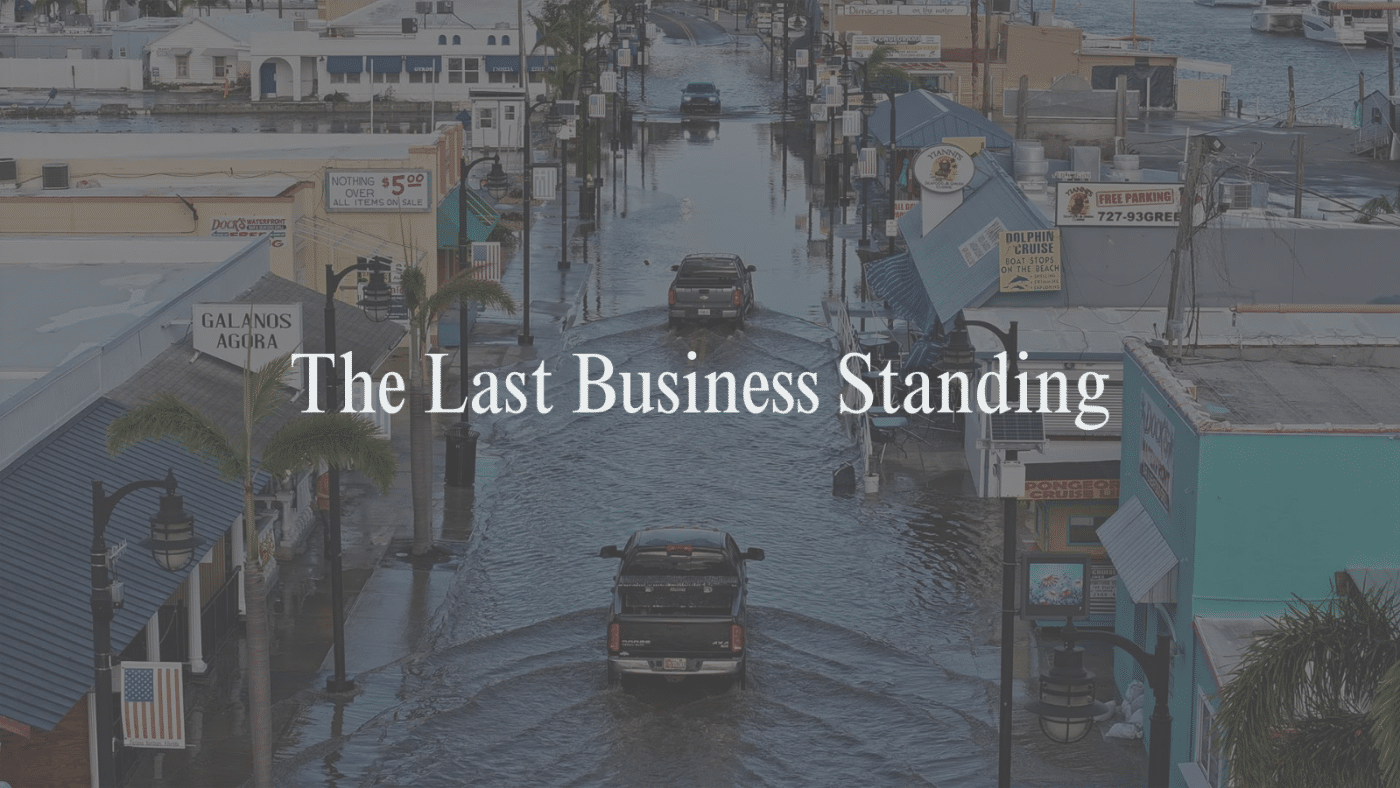
After the storm, power isn’t just an operational advantage. It becomes the most valuable thing on the block.
The morning after a Category 3 makes landfall, the city doesn’t look like the movies.
It’s quieter. Stiller. The traffic lights are dark. The gas stations have hand-written signs taped to the pumps. The strip malls are plywood and shadows. The roads are passable in places, impassable in others, and everyone who stayed moves carefully — picking through what’s left, looking for something open, something working, something that still has power.
And then they see it.
One building, halfway down the block, has lights on. The parking lot is full. There’s a line forming at the door. The generator is running. The air conditioning is running. The refrigerators are running. In a neighborhood that went dark eighteen hours ago, this building is the only address that still works.
That building isn’t just a business anymore. It’s the center of everything.
We talk about backup power in terms of protection. In terms of downtime avoided and revenue preserved and continuity maintained. These are the right conversations — but they miss something larger, something that only becomes visible in the hours after a major storm when the infrastructure around you collapses and you’re still standing.
What becomes visible is this: in a disaster, power is social currency.
The business with a generator doesn’t just keep its own lights on. It becomes the place where the neighborhood charges their phones. Where families with nowhere else to go find air conditioning on a ninety-degree, post-storm afternoon. Where the property manager of the building next door brings their laptop to answer emails from insurance adjusters. Where the restaurant feeds people who haven’t had a hot meal in two days. Where the hotel fills every room — not at rack rate, but at whatever they’re asking — because there is nowhere else.
This isn’t theoretical. After Hurricane Ian devastated Southwest Florida, a master-planned community called Babcock Ranch — just twenty miles from Fort Myers — kept its power on through the entire storm. While the hurricane knocked out electricity to more than four million Florida customers, Babcock Ranch barely flickered. And when the storm passed, their supermarket became the only one open in the area. The parking lot, by one account, was constantly packed. Neighboring communities had no power. Generators weren’t reliable because of fuel supply issues. Babcock Ranch was a functioning island in a sea of darkness.
Source: Rocky Mountain Institute — ‘Our Lights Stayed On During Hurricane Ian,’ 2022
“In a disaster, power is social currency. The building that has it doesn’t just survive — it becomes the most important address in the neighborhood.”
After Hurricanes Helene and Milton hit the Gulf Coast in 2024, the Manatee Chamber of Commerce opened its offices to anyone who needed to charge a device, access Wi-Fi, or work remotely. A chamber of commerce. Not a hospital, not a shelter — a business association with a generator and a working internet connection. It became a community hub because it could. Because it had power when nothing else did.
Source: Business Observer Florida — ‘After suffering two storms in two weeks, business leaders share stories of resilience,’ October 2024
Now consider what this means for South Florida — for the hotels on the beach, the medical offices in Broward, the data centers in Doral, the commercial buildings along Federal Highway, the apartment complexes from Homestead to Boca — in the context of a hurricane making landfall in 2026.
The 2026 season is forecast to be slightly below average. Thirteen named storms, six hurricanes, two major hurricanes — according to Colorado State University’s April outlook. The El Niño pattern developing over the Pacific is expected to create wind shear that suppresses overall activity. Forecasters from AccuWeather, NOAA, and CSU are aligned: this is not shaping up to be 2024. That’s the good news.
Here is the other news: it only takes one.
Source: CBS News / Colorado State University — 2026 Atlantic Hurricane Season Forecast, April 2026
One storm making landfall near Miami-Dade or Broward County will take out power to hundreds of thousands of customers. FPL and the utility crews will work around the clock — they always do — but restoration timelines after a major direct hit are measured in days, sometimes weeks. In the meantime, the businesses that prepared are open. The businesses that didn’t are dark. And in that gap — that window between landfall and restoration — the businesses with power do something that no marketing budget, no loyalty program, and no social media campaign can replicate.
They show up.
“Two identical buildings. Side by side. One prepared, one didn’t. On the morning after, only one of them matters to the neighborhood. Which one is yours?”
There is a version of the story where this is simply about revenue. The hotel that stays open during a storm gets booked out for weeks at full rate. The restaurant that keeps its kitchen running feeds the block and earns customers who will come back for years. The office building that never went dark retains tenants who might otherwise have reconsidered their lease. These things are real and they matter.
But the fuller version of the story is about something harder to quantify: what kind of business you become when your neighborhood is at its worst.
Power, after a storm, is not a feature. It’s not a selling point. It’s not even a contingency plan. It is the difference between being present and being absent at the exact moment when presence is the only thing anyone around you needs. The businesses that understand this don’t prepare because they have to. They prepare because they’ve decided what role they want to play when the city goes dark.
Hurricane season starts June 1st. The preparation window closes before that.
If you are a property owner, a facilities manager, a business operator, or anyone responsible for a building in South Florida, the question is not whether your generator will be needed this season. The question is what you want your building to mean to the people around it when it is.
The last business standing isn’t the one that got lucky. It’s the one that decided, in May, before the season started, before the names were announced, before anyone was paying attention — that when the storm came, they were going to be ready.
Make that decision now. While there’s still time to make it.