★★★★★
3 months ago
“Michael levandoski,this is best tech we can have in years.”
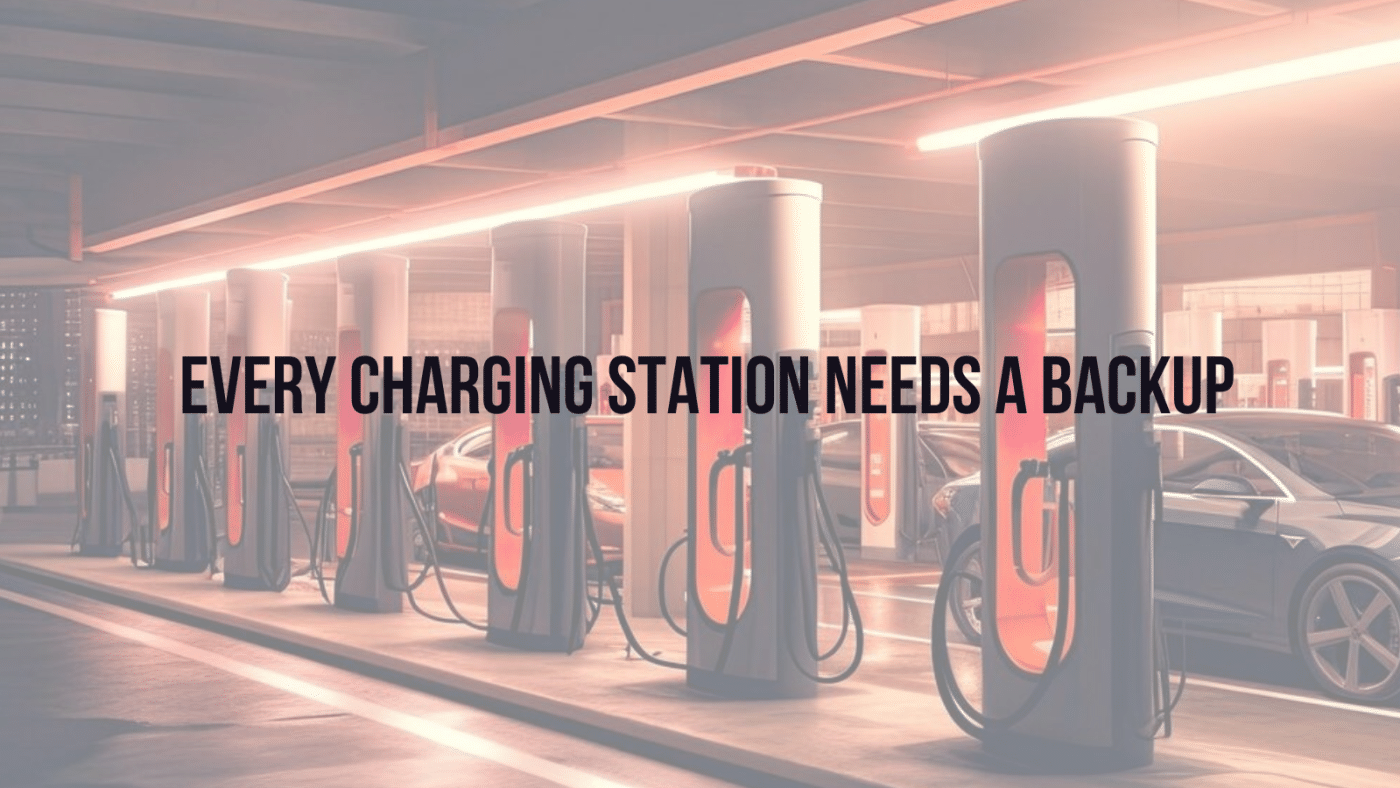
Florida is second in the nation for electric vehicle registrations — trailing only California. As of late 2024, the state had an estimated 365,000 registered EVs on the road, and that number has been climbing fast. Miami-Dade County holds the highest EV adoption rate in the state. The region connecting Miami to Fort Lauderdale to West Palm Beach now has more than 4,400 public charging stations. Florida’s public charging network has more than doubled since 2021, and Broward County alone has projected it needs to build over 1,200 new public EV charging ports every year through 2030 just to keep pace with demand.
That’s a lot of infrastructure. It’s also a lot of infrastructure with no backup.
An EV charging station isn’t a simple outlet. A Level 2 commercial charger — the kind installed at hotels, garages, office parks, and retail centers — draws between 6 and 19 kilowatts per port. A DC fast charger, the kind drivers rely on when they need a meaningful charge quickly, starts at 50 kilowatts and runs upward of 350. A single high-capacity fast charger delivers roughly 175 times the power of a standard wall outlet. When a commercial property installs a bank of these, the aggregate draw can reach hundreds of kilowatts — enough to trigger mandatory utility infrastructure upgrades with lead times stretching six to twenty-four months.
The chargers go in fast. The grid catches up slowly. And when something interrupts power to the station — a transformer failure, a utility event, any number of things that happen regularly in South Florida — every car at every port stops charging mid-session.
The EV driver pulling into a garage in Brickell or a parking lot off Federal Highway isn’t thinking about grid stability. They’re thinking about whether the charger works and whether their car will be ready when they need it. That expectation — that the station will be on, available, and functional — is the baseline. Anything short of it is a failure, and in a dense market like South Florida, where fast-charging station utilization rates run between 25 and 35 percent, a station going down doesn’t just frustrate one driver. It backs up the whole system.
Commercial properties understand this now. The hotels, the mixed-use developments, the corporate campuses that have made EV charging a tenant amenity and a marketing feature — they have the same interest in keeping those chargers live that they have in keeping their elevators running or their HVAC on. It’s not a nice-to-have. It’s part of the building’s operating promise.
In remote and grid-constrained environments — off-grid resorts, fleet depots in rural zones, island properties — the answer has already been worked out. You pair the charging infrastructure with a generator sized to the load. Operators running two to four public fast chargers in these settings typically run 100-kilowatt generators with parallel capability, staged to come online as demand scales. The generator runs at 70 to 80 percent load for efficiency. The chargers stay live regardless of what the grid is doing.
That model isn’t unique to remote locations. It belongs anywhere the cost of downtime is real — and in South Florida’s commercial EV market, that cost is increasingly real. A property with generator-backed charging keeps a guarantee that its competitors without backup cannot make. When the grid dips, the chargers stay on. When a utility event takes out the surrounding block, the station is still operational. That’s not a redundancy feature. It’s a service level.
We’ve spent years providing commercial backup power across Broward, Miami-Dade, Palm Beach, Collier, and Monroe counties — for hospitals, data centers, commercial properties, and everything in between. We supply, install, maintain, and service generators from 20 kilowatts to 3,000 kilowatts. We understand three-phase load requirements. We understand what commercial power infrastructure actually demands, and what it takes to keep it running when something goes wrong.
EV charging infrastructure is a commercial power load like any other. It needs to stay on. South Florida has built one of the most active EV markets in the country, and the stations serving that market need the same backup power infrastructure that every other critical commercial system already has. This is the next chapter of what we do — and we’re already doing it.