The Generator the Inspector Passed
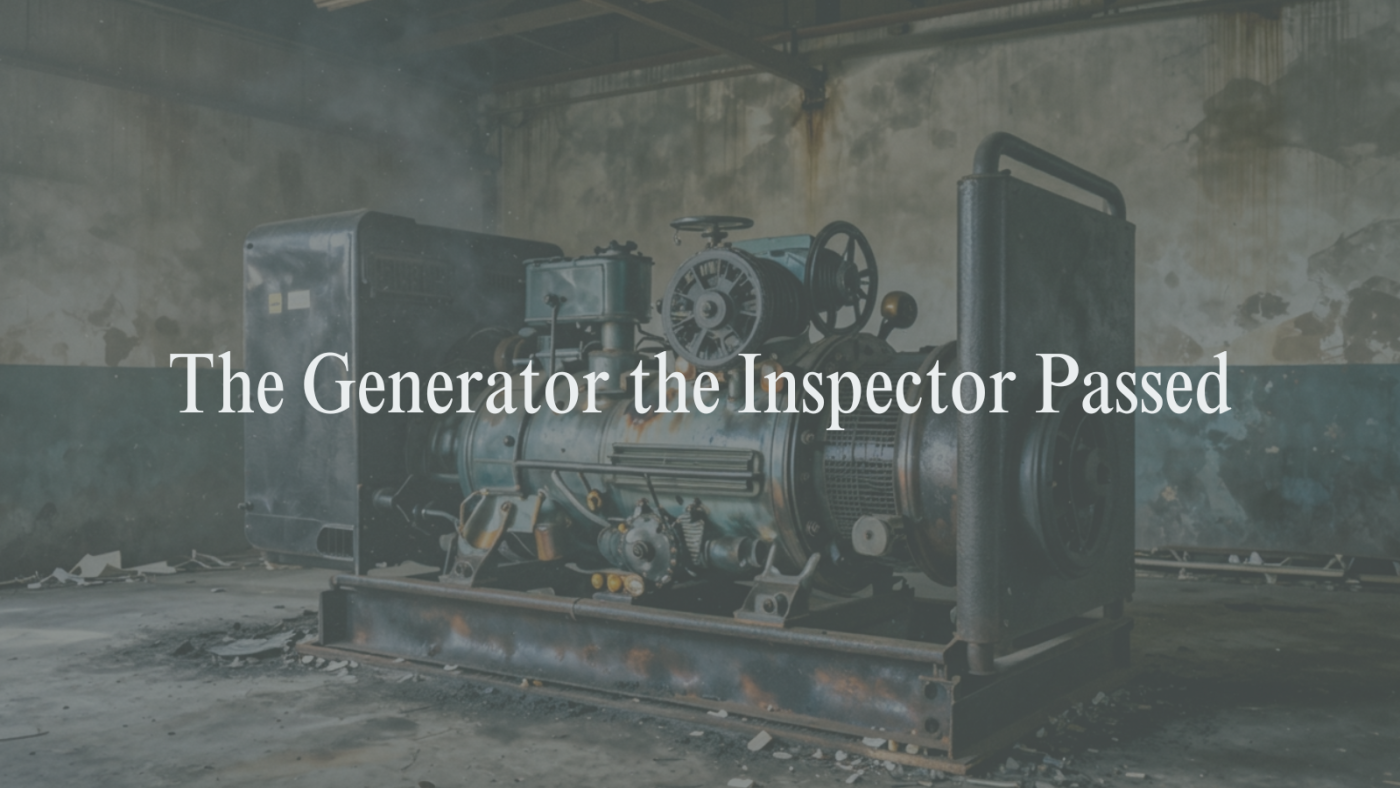
It started. It passed every test. The paperwork was clean. And then the power went out — and none of that mattered.
The building had a generator. It had been inspected on schedule. The transfer switch was functional. The fuel tank was full. On paper, the system was ready. When the grid went down, the generator started — just as it always had during routine checks. But within minutes of taking on the building’s actual electrical load, it faltered. Voltage dropped. Critical systems flickered. Hours passed before a technician arrived, and by then the damage was done.
The generator passed its last inspection. It just couldn’t do the job.
This points to one of the most persistent blind spots in commercial backup power: the difference between compliance and readiness. Inspections verify that a generator is installed, starts, and has fuel. They do not test how it performs under the full electrical demand of a real emergency — HVAC cycling, elevators running, server rooms and refrigeration drawing power all at once. A unit that runs fine at 40 percent capacity behaves like a different machine at 80 or 90 percent. Voltage regulation degrades. Weak components surface. And by then, it’s too late to find out.
“An inspection tells you the generator exists. A load bank test tells you whether it works.”
Fuel is the second issue inspections miss. Diesel degrades in as little as six to twelve months without proper treatment. In South Florida’s humid climate, water infiltration and microbial contamination are common in tanks that sit idle between storms. A generator running on degraded fuel may start, run briefly, and fail — in a way that takes longer to diagnose than a unit that simply wouldn’t turn over.
The third is environmental wear. Heat, salt air, and humidity accelerate corrosion and material degradation in ways a standard checklist doesn’t capture. Battery terminals corrode. Wiring degrades. Enclosures that appeared sealed allow moisture over time. These failures don’t show up during an inspection. They show up during a Category 3 event at three in the morning.
“Most generator failures are not sudden. They build quietly — through skipped service, degraded fuel, and environmental wear — until the moment the generator is finally asked to perform, and can’t.”
Inspections are not the enemy. They are the floor. The real question for any facility manager in South Florida is not whether the generator passed its last inspection — it’s whether it’s ready for the next storm.
Because the inspector’s signature on a form does not run your building when the power goes out. Your generator does. And the only way to know if it can is to test it like it matters — before the moment when it has to.
Source: NFPA 110 — “Standard for Emergency and Standby Power Systems,” 2022